OUR BLOG
Practical guidance, interview prompts, and preservation tips—built for families and legacy projects.
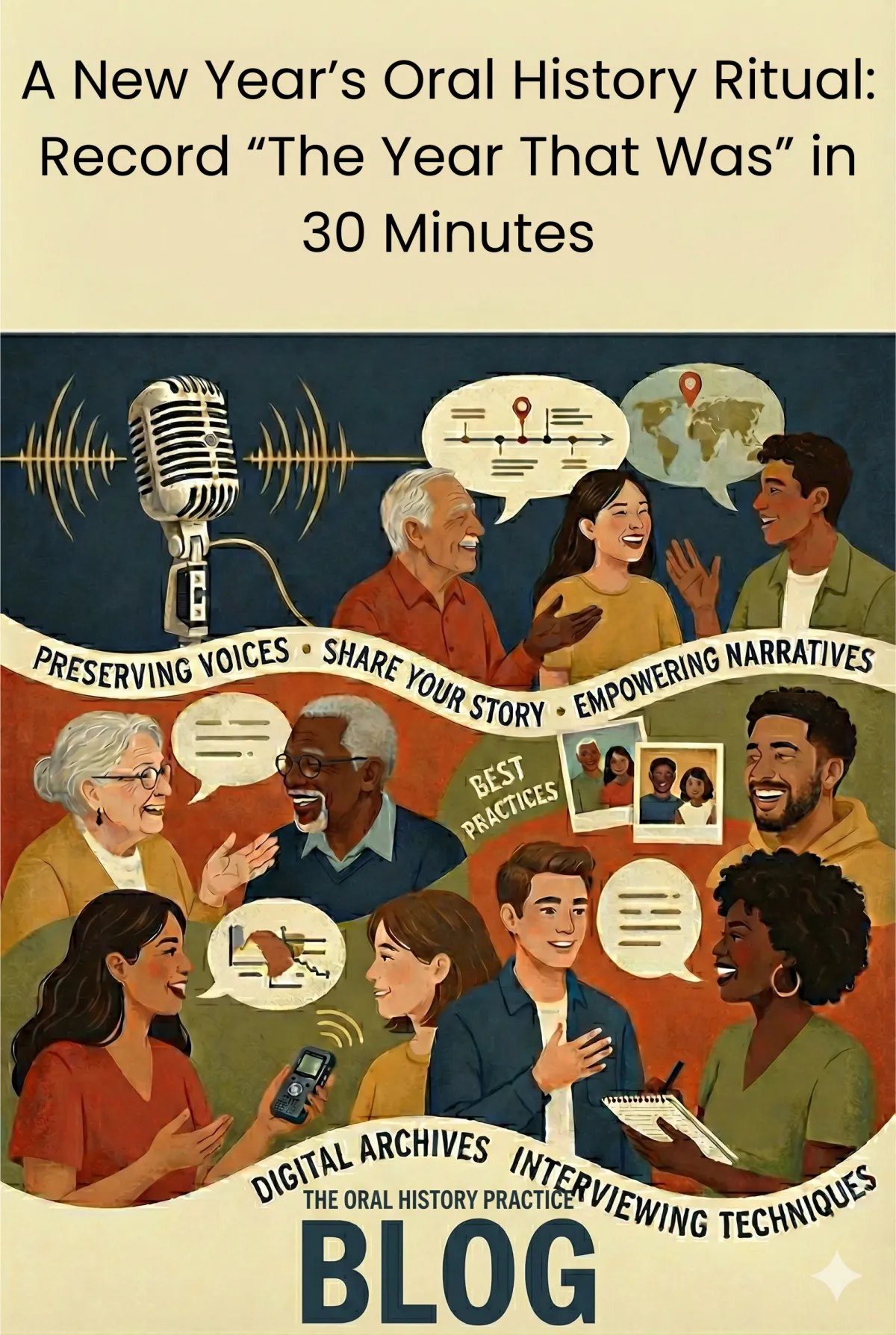
A New Year’s Oral History Ritual: Record “The Year That Was” in 30 Minutes
New Year’s arrives with a familiar rhythm. We make ambitious resolutions, we buy planners we won't use, and by February, the energy fades. We are so focused on changing our future that we often forget to capture our present.
Here is a different proposal for this year. Instead of a resolution you might abandon, create a ritual you can repeat.
The promise is simple: In just 30 minutes, you can capture a year’s worth of texture—what mattered, what changed, and what you want remembered.
You don’t need professional microphones or a sound booth. Your smartphone is fine. You don’t need to be a historian. You just need a quiet corner and a little curiosity.
Note: This is the rare holiday tradition that does not require matching pajamas.
Why this works (even if you’re “not a storyteller”)
We often think we need to wait for a major milestone—a 50th anniversary or a retirement party—to record our stories. But memory is slippery. By the time we get to those milestones, the specific details of right now have faded.
This 30-minute ritual works because:
It captures the texture. You aren't just recording facts; you are preserving the voice, the laugh, and the current perspective of a loved one.
It creates a "Time Series." If you ask roughly the same questions every January, you create a fascinating map of how a person evolves over time.
It celebrates the micro-moments. We often regret not capturing the ordinary days—the coffee shop we went to every Sunday, the funny catchphrase of the year, the small routines.
This is a low-lift wins. It’s one conversation, not a memoir.

The 30-minute “Year That Was” plan
You don’t need to improvise. Follow this structure to keep the energy high and the timing tight.
Before you record (3 minutes of prep)
Find the spot: Pick a quiet corner away from the dishwasher or the TV.
Sit close: Audio quality drops significantly if you are more than three feet apart.
Get consent: A simple, “Is it okay if I record this just for the family to have?” is usually enough.
The Test: Record 10 seconds of chatter and play it back to ensure you aren't muted.
Callout: The best setup is the one you’ll actually do. Don't let perfectionism stop you from hitting record.
The Recording Flow
Use this timeline to keep the conversation moving.
0–3 Minutes: The Warm-up Start with easy wins to get comfortable.
“Where were you at the very start of this year versus now?”
“If you had to pick one word to describe this year, what would it be?”
“What surprised you most this year—good or bad?”
3–20 Minutes: The Story Core Don't ask all of these. Pick 4–6 prompts from these buckets that feel right for your person.
Bucket A: Moments
“Is there a specific moment you wish you could replay?”
“What was a small joy that kept showing up in your weeks?”
“Describe a day that changed your perspective.”
Bucket B: People & Relationships
“Who impacted you the most this year?”
“Which relationship deepened or taught you something new?”
“Was there a conversation you keep thinking about?”
Bucket C: Challenges
“What was a hard thing you navigated, and what helped you get through it?”
“What is something you learned to do differently?”
“What is a fear you faced, even quietly?”
Bucket D: Places & Routines
“Where did you spend most of your time this year?”
“What became your ‘normal’ routine?”
20–28 Minutes: Meaning & Legacy Now that they are warmed up, go a little deeper.
“What did this year teach you about yourself?”
“What do you hope the family understands about this season of our lives?”
“What are you proud that you protected this year—values, time, or relationships?”
28–30 Minutes: The Close End on a high note.
“Is there anything you hoped I’d ask but didn’t?”
“If this year was a book or a movie, what title would you give it?”

How to do this without making it weird
If your family isn't used to "deep talks," pulling out a recorder can feel formal. That’s okay. You can set the tone to make it comfortable.
The Script: “I want to start a simple family tradition: just one 30-minute recording each year. If it feels awkward, we stop. If it’s good, we keep going.”
Tone Option A: Casual “This is just for us. No pressure, no performance. Just chatting.”
Tone Option B: Respectful “I value your story, and I realized I don't want to lose the details of this year.”
Quick facilitation tips:
Don’t multitask. Put your phone in 'Do Not Disturb' and maintain eye contact.
Use follow-ups. Simple phrases like “Tell me more about that” or “How did that feel?” work wonders.
Embrace silence. When they stop speaking, count to three in your head before you speak. Often, the best thought comes after that initial pause.
What to say if they resist
It is normal for people to be camera (or microphone) shy. Here is how to handle the common hurdles.
“I hate my voice.”
Response: “I get that. But this is for the family, not for the public. Your voice is exactly what we want to keep.”
“I don’t know what to say / I don't remember.”
Response: “Totally fine. I have a list of easy questions. We’ll just see what comes up.”
“Not right now.”
Response: “No problem. Would tomorrow morning over coffee be better?”
If memory feels fuzzy: Use sensory anchors. Instead of asking "How was Christmas?", ask "What did the kitchen smell like that morning?" or "What song seemed to play on the radio constantly?" Anchors unlock memory faster than broad questions.

After you hit stop (The 5-minute follow-through)
The recording is useless if you lose it in your digital clutter. Take five minutes immediately after you finish to make it usable.
Name the file: Do not leave it as
Memo_492.m4a. Rename it immediately to2024_Year-That-Was_[Name].Create Index Notes: Open your Notes app and jot down 5 bullet points of what you talked about (e.g., New Job, Grandma's 80th, The Trip to Maine). This makes it searchable later.
Back it up: Save it to a cloud service (Dropbox/Google Drive) and your local hard drive.
Optional but powerful: Create a dedicated folder structure: Family Archive > [Year] > Oral History. If you are tech-savvy, pull a 60-second highlight clip to text to the family group chat.
Want a done-for-you structure?
If you want to ensure this happens without having to manage the logistics yourself, we have two ways to help.
1. The Starter Kit Grab our printable "Year That Was" question ladder, scripts, and a file-naming checklist. It’s a PDF you can print out and put on the dinner table. Buy the Starter Kit
2. The Legacy Session If you want a professional to guide your loved one through their life story and deliver a polished, edited audio keepsake, book a session with us. We handle the tech, the interview, and the archive. [Link: View Legacy Packages]
Future-you will be grateful you captured the ordinary year—because looking back, that’s where life actually lived.

Start Preserving Your Stories Today
Invest in the Oral History Starter Kit—prompts, planning tools, and a simple step-by-step process to help you record meaningful stories with confidence.
A guided toolkit that helps you plan, record, and preserve an interview—without the overwhelm.
Ask better questions with prompts that invite real stories
Stay organized with a simple session plan (prep → record → follow-up)
Capture clean audio/video with practical setup guidance
Handle sensitive moments with respectful consent and comfort tips
Preserve it properly so files stay accessible for the long haul
What's Included
This digital toolkit, developed from years of professional practice, provides the essential tools and templates to start your oral history project today:
Project Planning & Scoping Workbook: Define your goals and create a clear roadmap.
Customizable Informed Consent Form: The essential ethical document for any project.
The Essential Interview Checklist: A step-by-step guide for before, during, and after your interview.
Guide to Affordable & Effective Recording Equipment: Our top picks for any budget.
Oral History Transcription Template: A professional template to accurately transcribe interviews.
PLUS: Bonus Documents & Community Support (A $125+ Value!)
Here is 🎁 The Interviewer's Success Pack: Your free bonus guides (a $125 value). These added resources ensure you are fully prepared for every interview and have ongoing access to support.
The Interview Success Planner: Essential pre-interview worksheet for background research and preparation.
The Storykeeper's Log: Critical post-interview field notes template to capture immediate insights.
Private Facebook Group Invitation: Connect with fellow practitioners for tips, advice, and support.
Included free with your Starter Kit purchase.
If you want a simple, ethical way to capture meaningful stories—start here.
What you get: A complete digital Starter Kit—prompts, planning workbook, session checklist, consent form, and recording/transcription templates.
Timeframe: Start planning today and record your first interview this week.
Who it’s for: Anyone who wants to preserve meaningful family stories with a simple, ethical process—no experience required.
No experience needed • Ethical consent template included • Step-by-step guidance
One-time purchase. Instant access.
Site Menu
© 2025 The Oral History Practice, LLC. All rights reserved.
Instagram
Youtube
Facebook